
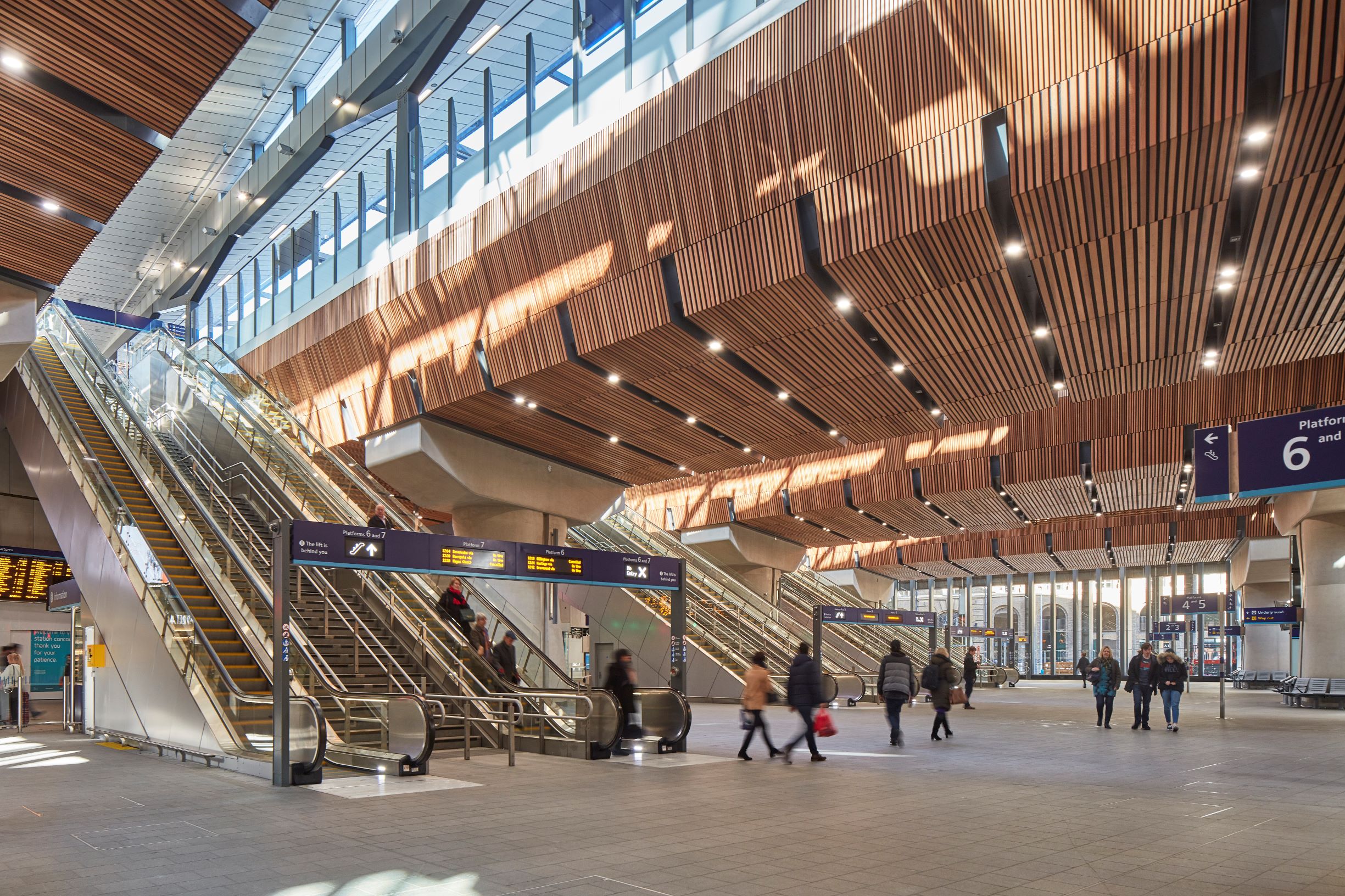
The UK large-scale commercial and public construction sectors are undergoing a profound structural shift. Over the past 12 months, high borrowing costs and macroeconomic pressures caused private commercial new work output to fall by 6.1%, while overall planning approvals dropped 16% annually.
Yet, traditional speculative builds are being replaced by an urban retrofit boom. Corporate demand for ESG-compliant workspaces, using sustainable materials such as BCL’s solid wooden panels, or our recycled aluminium non-combustible cladding, drove a 94% year-on-year surge in office project starts, concentrated heavily in London (+59%).
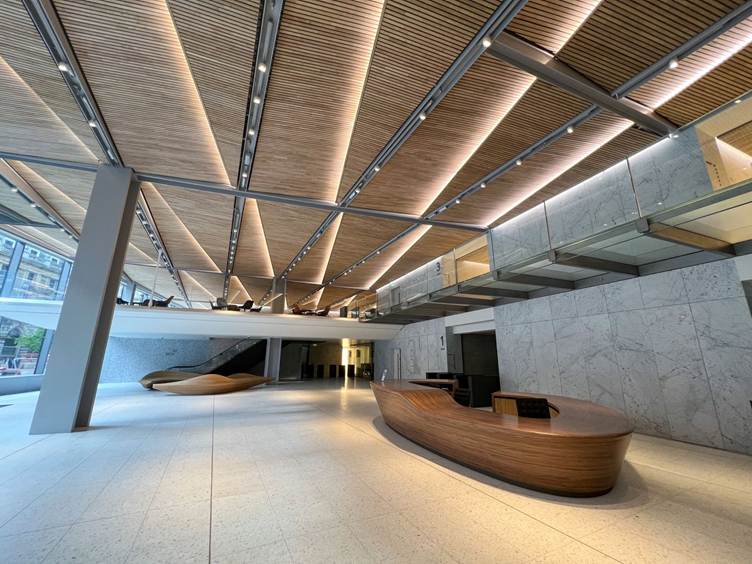
8 Bishopsgate (Wilkinson Eyre, LendLease) BREEAM Outstanding Rated – using BCL wood ceiling system in Sweet Chestnut, UKAS tested to Class B-s2,d0.
For Full Case Study VIDEO WATCH here >>
State-backed infrastructure and public non-housing output remained resilient, growing 1.1%. This pivot toward adaptive re-use has made strict lifecycle carbon tracking the primary driver of material procurement, establishing a high-demand market for advanced, precision-engineered building systems, with dedicated project specific carbon tracking – such as BCL’s unique ‘carbon calculator’ service – allowing accurate design specific full LCA carbon and EPD calculation for any timber cladding panel or wood ceiling system.
UK Refurbishment & Material Trends (Past 12 Months)
├── Office Project Starts: ⬆️ 94.0%
├── London Commercial Starts: ⬆️ 59.0%
The Carbon Accounting Matrix
To secure planning approvals and achieve high BREEAM ratings, developers are evaluating architectural specifications using precise upfront Global Warming Potential (GWP) and embodied carbon tracking (kg CO₂e per kg):
| Material Category & Application | Embodied Carbon (kg CO₂e / kg) | Lifecycle Profile & Supply Chain Dynamics |
| Virgin Aluminium (Primary Facades) | 12.0 to 18.0 | Fossil-fuel intensive smelting; heavy lifecycle carbon penalty. |
| BCL – Recycled Aluminium Panels | 0.5 to 1.5 | ~65% recycled content; includes up to 50% true post-consumer scrap. |
| BCL – Wood Panels (A1-A3) | -0.35 to -0.56 | Net negative upfront; high-performance biogenic carbon storage. |
To view more on BCL’s low carbon systems and negative footprint you can WATCH our video https://www.youtube.com/watch?v=F5rVZmwR224
Strategic Material Supply Chain Shifts
1. Precision-Engineered Timber Panel Systems
While heavy engineered timber handles the load-bearing framework, the refurbishment boom is heavily reliant on specialised, high-performance interior and exterior finishes to drive down internal fit-out carbon counts.
- Verified Low-GWP Footprint: Specifying UK-manufactured systems such as BCL Timber Projects provides developers with highly accurate LCA metrics. Their real wood slatted panel systems offer a verified negative GWP profile of typically -0.35 to -0.56 kgCO₂/kg at the A1-A3 production stage.
- Negative Net Carbon – Even After Installation: Because of low-energy domestic processing and high raw wood volume, BCL’s timber panels remain carbon-negative even after the A5 installation stage, absorbing more biogenic carbon than is emitted during transport and site-assembly.
- Advanced Commercial Delivery: Designed for high-use public atriums, acoustic wooden ceilings, and commercial timber slat walls, these secret-fixings systems incorporate full BIM Level 4 design coordination. This off-site prefabrication cuts installation timelines, limits material waste, and features extensive UKAS accredited fire testing to guarantee compliance up to Class B standards.
2. High Post-Consumer Recycled Content Aluminium
Architectural aluminium remains essential for energy-efficient building envelopes and contemporary wall panels. However, buying habits have pivoted to bypass the heavy carbon penalties associated with primary smelting:
- The Post-Consumer Recycled Advantage: For high-density projects requiring non-combustible finishes, BCL Timber Projects offers non-combustible wood-effect cladding panels utilizing BLO3 billets from Hydro. These premium extrusion alloys feature typically 65% recycled content, including up to 50% post-consumer scrap diverted from end-of-life construction waste.
- Drastic Emission Reductions: Remelting post-consumer aluminium uses 95% less energy than primary ore processing, saving roughly 16.5 kg CO₂e per kilogram utilized compared to virgin alternatives – and BCL’s aluminium A1 cladding panels
- Compliance and Safety: These high-recycled-content aluminium wood effect systems are fully engineered to meet non-combustible requirements while delivering a flawless, warm aesthetic, allowing high-rise developments to marry strict fire safety standards with demanding corporate decarbonisation targets.
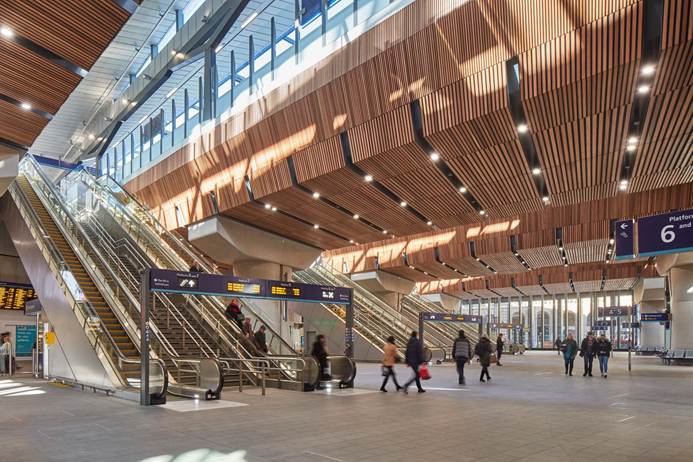
London Bridge Station above, was a giant scale £1Bn retro-fit in 2007 using BCL’s UKAS tested ceiling systems. Read full Case Study here à https://bcltimberprojects.co.uk/projects/london-bridge/
To get accurate carbon calculations for your design, or for more information on BCL’s unique Carbon Negative Wood Panels and our exceptional Aluminum non-combustible A1 cladding systems – please contact us today on +441189 344 155 or alternatively e-mail us on: info@bcl.uk.net .